
MIND BALANCE
A holistic wellbeing app for everyday balance
In this group project, we were asked to design a digital product within the health and wellbeing space. Our team identified a growing need for preventive mental health support – not as a replacement for therapy, but as a daily companion to help users manage stress and avoid burnout. Instead of building yet another meditation or sleep app, we aimed to combine the most helpful tools – reflection, structure, affirmation and rest – into one cohesive experience.
Where we started
We launched the project by creating and sharing a survey to better understand people’s everyday struggles with stress and mental load. The responses, along with data from Folkhälsomyndigheten and Försäkringskassan, confirmed that mental strain is a widespread and increasing issue in Sweden. This was followed by a workshop where we explored key themes and early ideas together as a team.
What we found:
Users often rely on multiple apps for wellbeing support
People struggle to stay consistent in their routines
There’s a need for tools that feel supportive, not overwhelming
81%
feel stress
From idea to experience
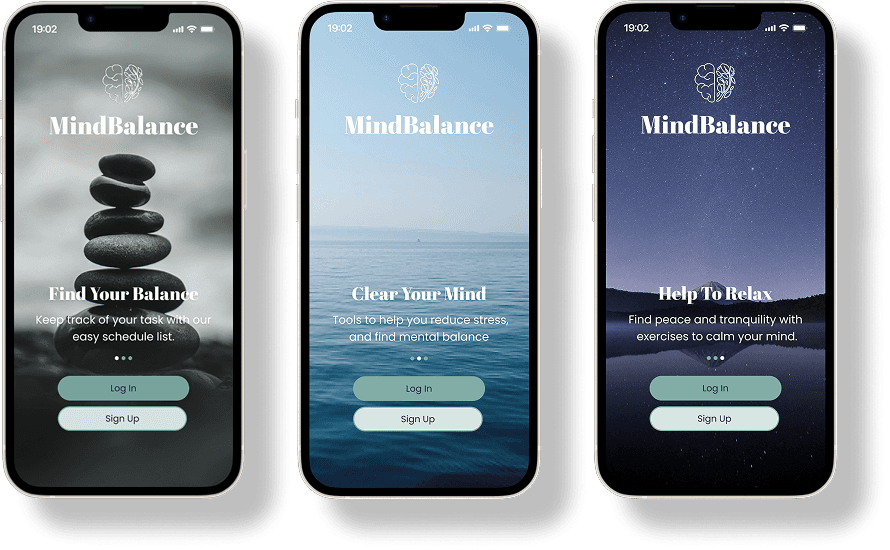
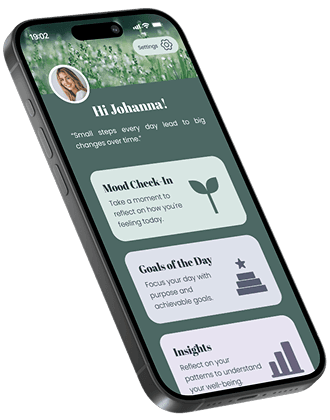
Our solution was MindBalance. A calming, intuitive app designed to help users reflect, recharge and regain clarity. It offers guided exercises, gentle affirmations, simplified task management and personalised insights – all wrapped in a soft, user friendly and emotionally safe design. Built as a clickable prototype, the app was fully designed in Figma.
Design process
Empathise – Survey and workshop
Define – Synthesising results into goals
Ideate – Brainstorming features and structure
Prototype – Creating and refining wireframes
Test – User testing and iteration
Outcome
The result was a calm and unified app that supports users in both reflection and action. By offering guidance and insight, MindBalance helps reduce the feeling of overwhelm and encourages everyday wellbeing.
Key Learnings
This project deepened my understanding of collaborative design, especially how to merge practical UX tools with emotional sensitivity. It also strengthened my skills in visual storytelling, tone of voice and accessibility.
If I were to take the project further, I’d focus on expanding personalisation, integrating more dynamic content and testing the app with a broader audience.